¶ 1. Sensor Distribution
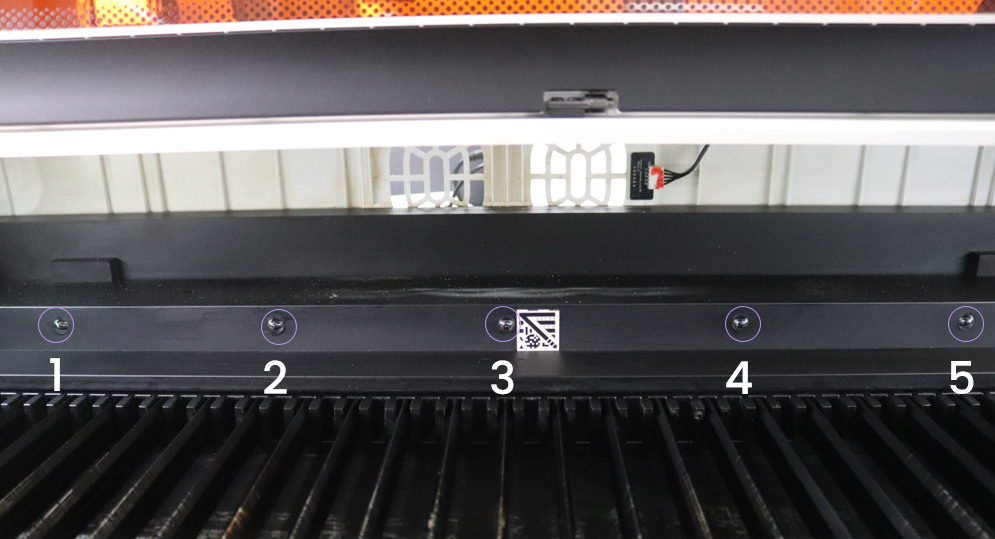
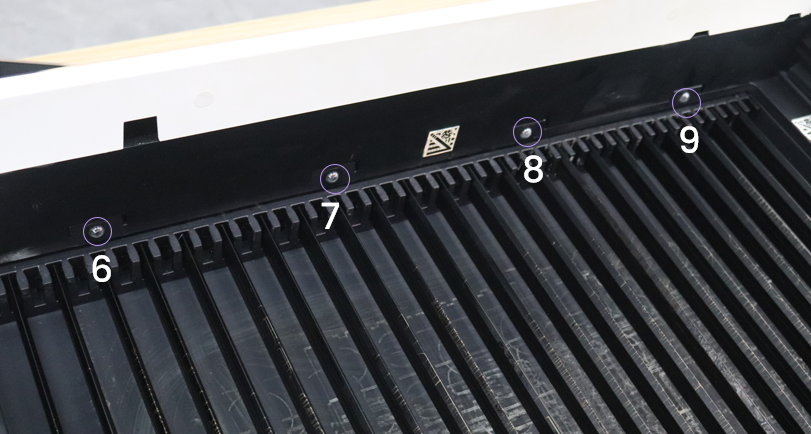
The X1 features a 10-sensor full coverage design to ensure rapid detection of flames anywhere in the processing area.
| Location | Quantity | Description |
|---|---|---|
| Inside the chassis | 9 units | Distributed around the inner walls, covering the entire processing area |
| On the laser module | 1 unit | Located on the edge of the laser module heat sink, providing close-range monitoring of the processing point |
¶ 1.1 Chassis Sensor Distribution
 |
 |
|---|---|
a. Location of Rear Sensors |
b. Sensors near the Front Opening |
The 9 chassis sensors are distributed around the device's inner walls, forming a circular detection zone. Flames generated anywhere on the worktable can be detected quickly.
¶ 1.2 Laser Module Sensor Location
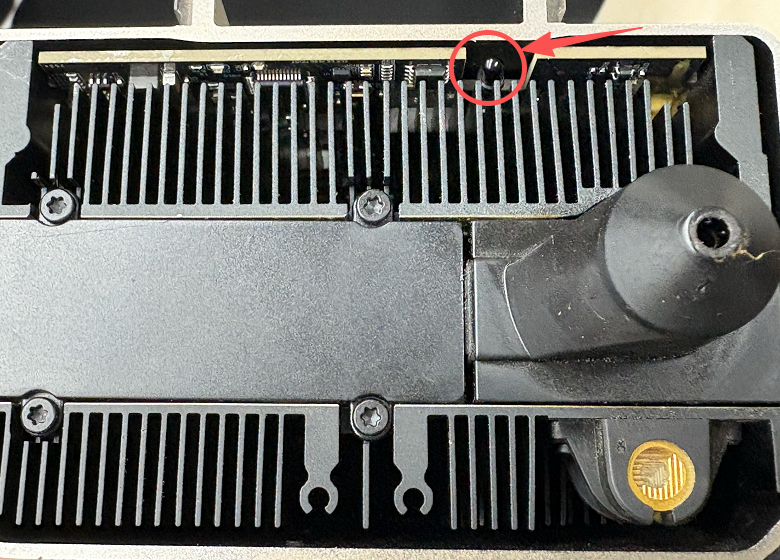
The sensor on the laser module is located on the upper edge of the heat sink assembly. It can closely monitor the laser processing point and provides the fastest response to open flames generated at the processing location.
Due to its protected location, the sensor on the laser module generally requires less frequent cleaning. However, it is still recommended to inspect it during regular laser module maintenance.
¶ 2. Flame Detection Response Mechanism
¶ 2.1 Detection Principle Explained
A flame sensor is essentially a special infrared spectrum detector. Unlike ordinary infrared sensors, it is specifically designed to recognize the unique optical "fingerprint" produced during combustion.
When materials (such as wood, acrylic, plastic, etc.) burn, the oxidation reaction of hydrocarbons releases infrared radiation at specific wavelengths—particularly the 4.3μm wavelength infrared light. This is a unique spectral characteristic of flames. Ordinary lights, sunlight, and heated materials do not produce radiation in this frequency band.
X1's sensors, through precise optical filtering and signal amplification, can capture this characteristic signal in complex environments. Even if smoke or reflections during processing cause certain interference, the algorithm can distinguish between "real flames" and "environmental interference" through multi-sensor cross-validation and duration judgment.
¶ 2.2 System Response Logic
The X1 uses intelligent detection algorithms that combine real-time data from 10 sensors for comprehensive judgment. When signs of combustion are detected, the system responds based on signal strength and duration:
¶ 🟢 Weak Signal (No Alarm Triggered)
- The system detects minor infrared radiation interference
- No alarm is triggered, and processing continues
- Common in non-hazardous situations such as material reflections and ambient light
¶ 🔴 Confirmed Flame (Safety Protection Triggered)
- The system confirms detection of real flame characteristics
- Immediate full safety response is triggered:
- Buzzer alarm
- Flame alarm displayed on UI/host/APP
- Processing task stopped immediately ⭐ Core protection function always active
- Button red light flashing
- Laser output stopped
- Cooling fan turned off
- Exhaust fan stopped
- Air pump stopped
- Air purifier stopped
- Activate official optional fire extinguisher, release CO₂ cylinder
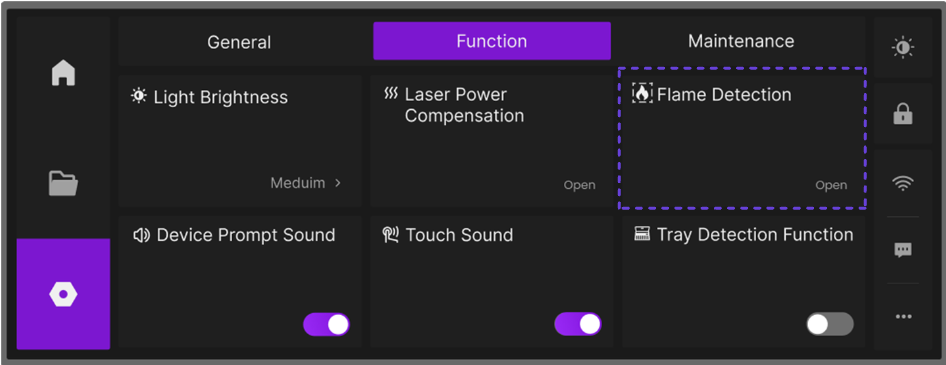
Function Status Note: The flame detection function is enabled by default at the factory. You can check the current status of the flame detection function in the touchscreen "Settings → Function" menu.
📌 Important Note: The automatic CO₂ fire extinguishing function in item 10 requires the separate purchase of the official fire extinguishing device.
Most users are not equipped with this accessory, but this does not affect the normal operation of core safety functions such as flame detection and laser shutdown.
¶ 3. Important Notes
If you are using unofficial accessories or have not installed these devices:
- Flame detection and laser shutdown functions still work normally — These are the core safety protections available on all X1 devices
- ⚠️ Functions for automatically starting/stopping third-party devices (such as external air pumps) may not be available
- ⚠️ Automatic CO₂ fire extinguishing function is only available on devices that have purchased and installed the official fire extinguishing device
- Please manually ensure that related safety devices respond correctly during an alarm
¶ 4. Common Causes and Solutions for False Alarms
If the device triggers an alarm without a real flame, possible causes:
| Possible Cause | Solution |
|---|---|
| Sensor lens dust accumulation | Refer to Cleaning Flame Detection Sensors for cleaning instructions |
| Direct strong sunlight on the device | Avoid placing the device in direct sunlight |
| Strong light reflection from highly reflective materials | Adjust processing parameters or material placement angle |
| Strong infrared heat sources in the environment | Remove heaters and other infrared sources near the device |
¶ 5. Daily Maintenance Recommendations
- Regular Cleaning: Inspect and clean sensors after every 50 hours of use or after cutting large amounts of high-smoke materials
- Functional Testing: Perform flame sensor self-test in maintenance mode
- Visual Inspection: Visually check sensor windows for obstructions before each startup
- Maintain Ventilation: Ensure proper air circulation around the device to reduce smoke accumulation near sensors